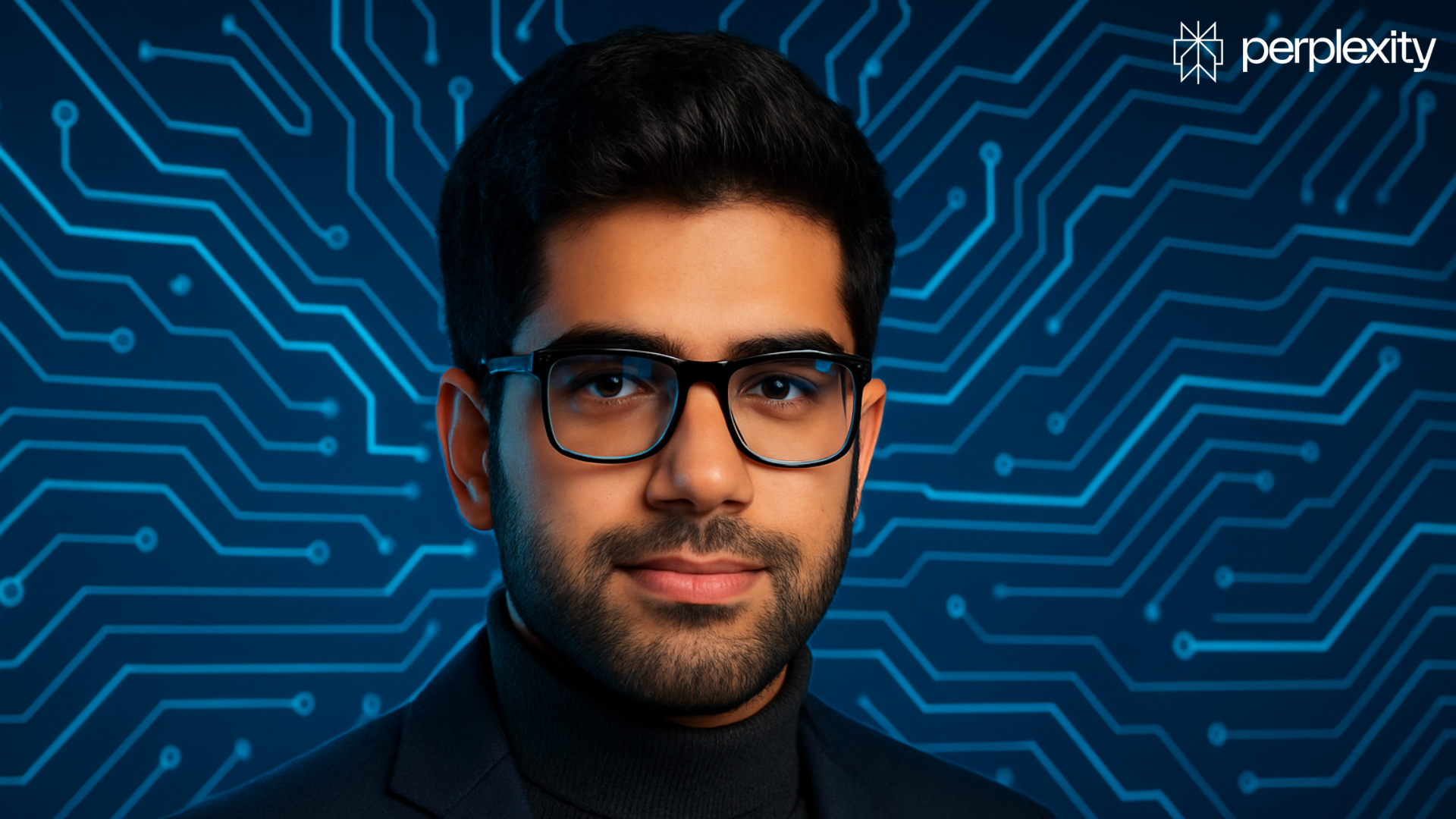
From India to Innovation: The Mind Behind Google’s AI Rival
Perplexity AI, founded by Indian youth Aravind Srinivas, is disrupting Google’s search dominance by offering real-time, source-based AI answers using existing models. Its smart strategy and rapid growth have made it one of the fastest-rising AI startups, now valued at $9 billion.
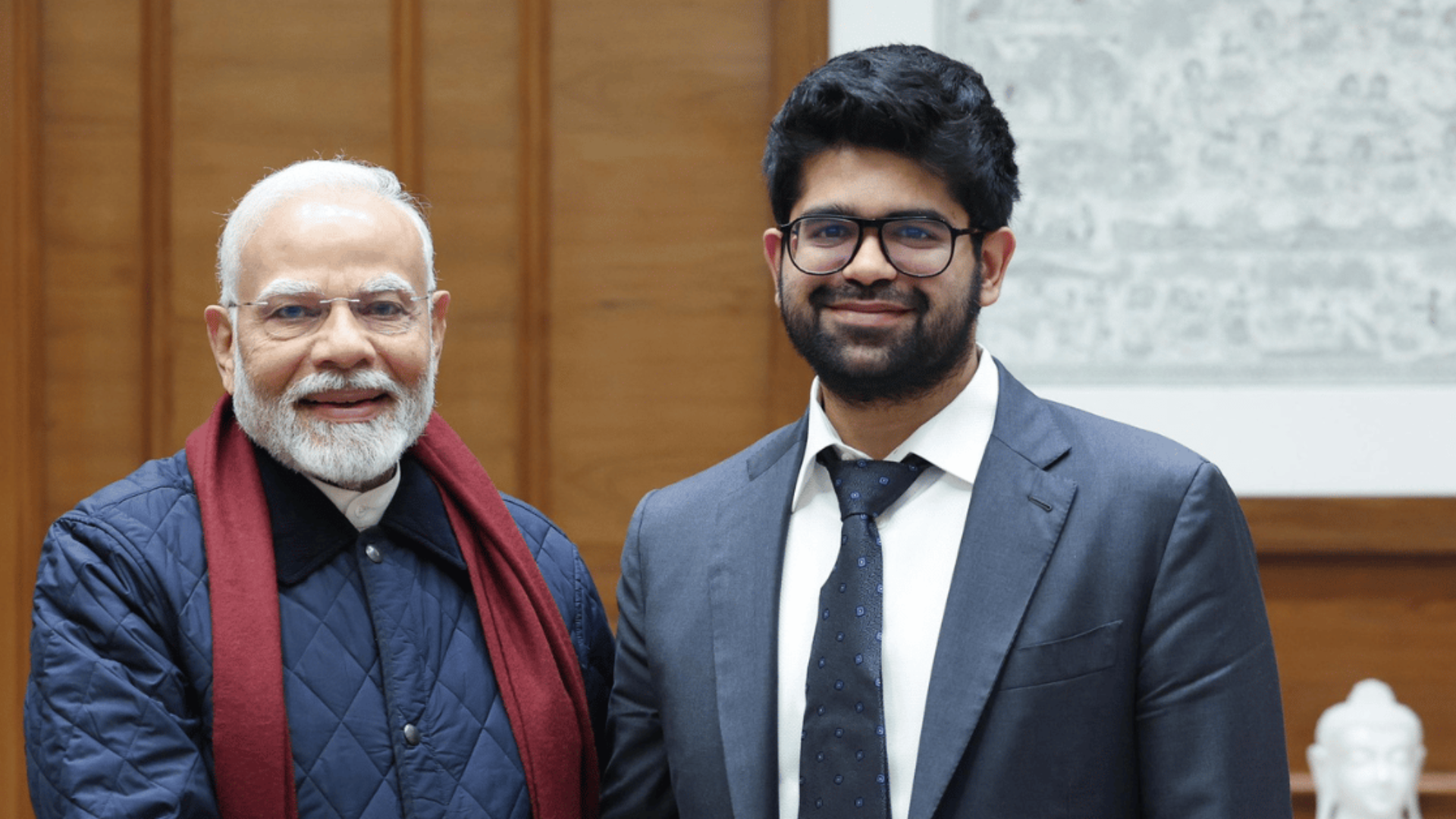
Silicon Valley, USA — In a digital world where Google has long been king, a bold challenger has entered the arena—Perplexity AI, founded by an ambitious Indian youth, Aravind Srinivas. With its real-time, source-backed AI answers, Perplexity is rewriting the rules of internet search.
Just two years after its launch in 2022, this AI-powered conversational search engine has secured over $74 million in funding, boasting backers like Jeff Bezos and NVIDIA. What makes it extraordinary? Unlike traditional AI tools, it offers instant responses with citations, making it smarter and more trustworthy.
🚀 A Disruptive Vision in a Monopolized Market
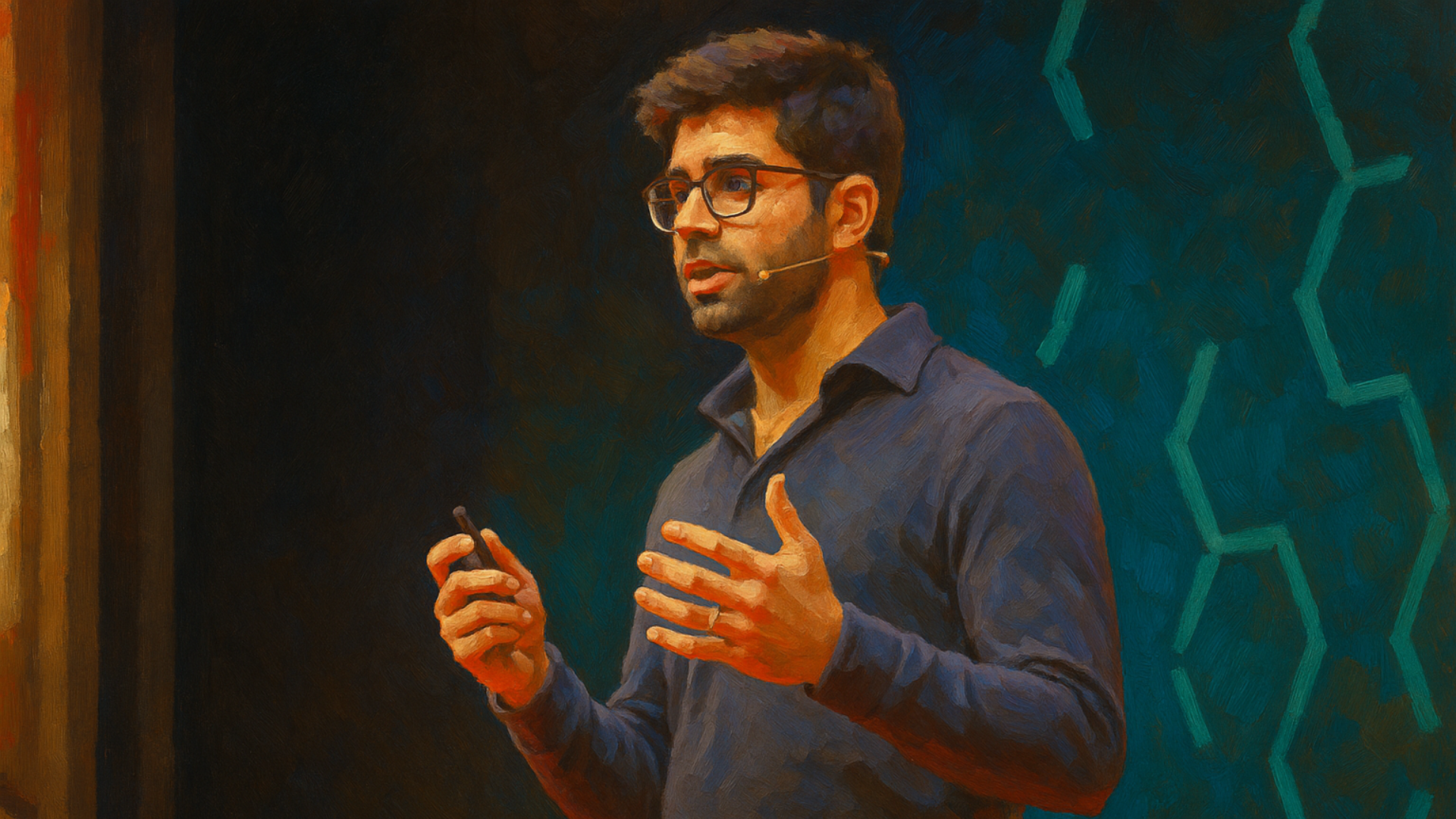
Aravind, a former research intern at Google, DeepMind, and OpenAI, started Perplexity with zero proprietary AI models—but with a clever strategy: use existing AI models (like GPT-4) and enhance them with real-time search integration.
This approach helped Perplexity avoid legal risks, stay lightweight, and still deliver highly accurate, verifiable answers—something ChatGPT and Google Bard initially lacked.
“We didn’t need to reinvent the AI—we just needed to rethink how we use it,” Aravind told investors during a recent tech summit.
📈 Unicorn Status Achieved
By early 2024, Perplexity was valued at $1 billion, officially earning unicorn status. Within months, that number jumped to $9 billion, and reports suggest the startup is eyeing a $14 billion valuation in its next funding round led by Accel.
⚔️ Taking on Google—One Query at a Time
Google, which controls 90% of the search market, relies heavily on its integration with Chrome and Safari. But with rising antitrust pressure and growing demand for AI-first tools, Perplexity is seizing the moment.
“Perplexity is what Google should have built,” says AI analyst Tara Patel.
🎯 Two Big Lessons from Perplexity’s Rise
- Innovation > Ownership – Instead of building everything from scratch, Perplexity smartly used others' AI tools and focused on the experience.
- Find Strength in Weakness – Aravind turned ChatGPT’s flaws—no real-time data, no sources—into his product’s strengths.
🌐 What’s Next?
As legal battles brew and AI continues to reshape digital habits, Perplexity is positioning itself as a serious alternative to Google—offering not just answers, but trust.
📢 “This is just the beginning,” Aravind said on X (formerly Twitter). “The future of search is real-time, transparent, and conversational.”


Leave a comment
Your email address will not be published. Required fields are marked *